
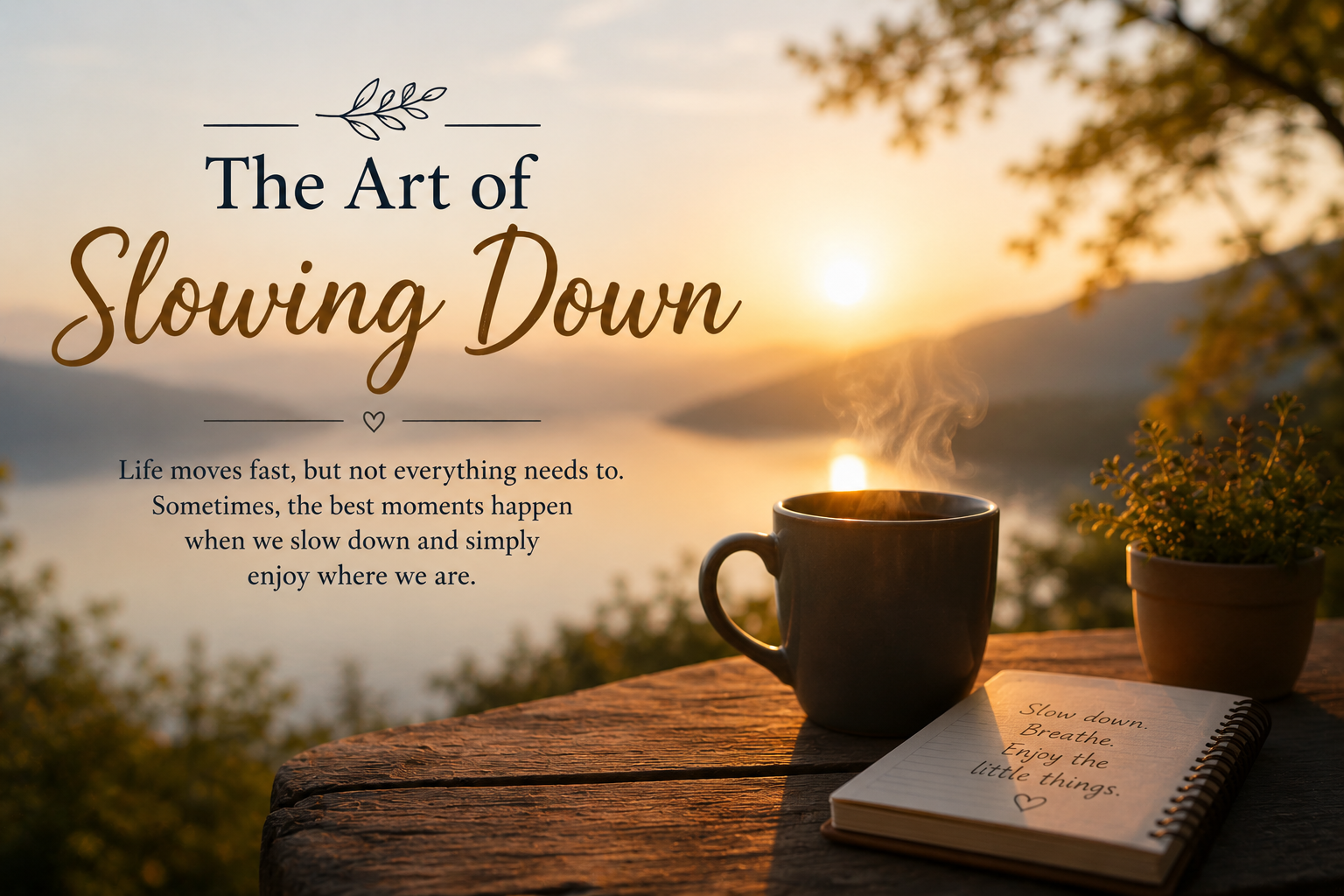
The Art of Slowing Down is becoming increasingly important in a world that never seems to stop moving. There’s always another notification to check, another task to complete, and another goal to chase. We rush through our mornings, hurry through our days, and often end our evenings wondering where all the time went. Somewhere along the way, being busy became a badge of honor. We started measuring our days by how much we accomplished instead of how much we experienced.
Why Are We Always in a Hurry?
Think about a typical day. Many of us wake up and immediately reach for our phones. Before we even get out of bed, we’re checking messages, scrolling through social media, reading emails, or catching up on the latest news. The day begins with information overload, and it rarely slows down from there.
The pace of modern life has convinced us that faster is always better. Faster internet, faster communication, faster results, and faster success. While technology has made life more convenient, it has also created a culture where patience feels outdated. We expect instant responses, immediate gratification, and continuous productivity.
Unfortunately, this constant rush often leaves us feeling stressed, overwhelmed, and disconnected from the present moment.
Understanding The Art of Slowing Down
This is where The Art of Slowing Down becomes important. It is not about avoiding responsibilities or giving up on your goals. Instead, it is about being intentional with your time and energy.
Slowing down means creating space to think, reflect, and appreciate life. It allows us to focus on what truly matters rather than constantly chasing the next task or achievement. When we slow down, we become more aware of our surroundings, our emotions, and our priorities.
Life isn’t about how quickly we move; it’s about how meaningfully we live.
The Impact of Constant Busyness
When we constantly move from one task to another, our minds rarely get a chance to rest. We may be physically present in a meeting, at home with family, or spending time with friends, but mentally we are somewhere else.
This nonstop busyness can lead to:
- Increased stress and anxiety
- Mental exhaustion and burnout
- Reduced focus and productivity
- Poor work-life balance
- Strained relationships
Many people mistake being busy for being productive. However, filling every moment with activity does not necessarily mean we are making progress toward what truly matters.
Benefits of Slowing Down
Reduced Stress and Better Mental Health
One of the greatest benefits of slowing down is improved mental well-being. Constant pressure and overstimulation can drain our energy and affect our emotional health.
Taking time to pause, breathe, and recharge helps reduce stress levels and improves overall happiness. Even simple activities like meditation, journaling, or taking a quiet walk can make a significant difference.
Improved Focus and Productivity
Contrary to popular belief, slowing down can actually make you more productive.
When we focus on one task at a time instead of multitasking, we work more efficiently and produce better results. Slowing down allows us to concentrate deeply, make fewer mistakes, and complete tasks with greater quality.
Stronger Relationships
Meaningful relationships require time and attention. When we are constantly distracted by work, notifications, and responsibilities, we often miss opportunities to connect with others.
The Art of Slowing Down encourages us to be fully present with family, friends, and colleagues. Listening carefully, having meaningful conversations, and spending quality time together can strengthen our relationships and create lasting memories.
Learning from Nature
Nature provides a powerful reminder that growth takes time.
Trees do not rush to grow. Flowers bloom in their own season. Rivers flow steadily toward their destination without urgency. Yet everything in nature unfolds exactly as it should.
Spending time outdoors can help us reconnect with a slower rhythm of life. Whether it’s a walk in the park, a hike through the countryside, or simply sitting under a tree, nature encourages us to pause and appreciate the present moment.
Practicing Gratitude Through Slowing Down
When life moves too quickly, we often focus on what we don’t have instead of appreciating what we do have.
Slowing down helps us notice the small blessings that are easy to overlook:
- A warm cup of coffee in the morning
- A conversation with a loved one
- A beautiful sunset
- Good health and well-being
- Moments of peace and quiet
Practicing gratitude shifts our attention from constant striving to genuine appreciation.
Simple Ways to Slow Down Every Day
You don’t need to completely change your lifestyle to experience the benefits of slowing down. Small changes can have a big impact.
Here are a few simple practices:
- Start your day without checking your phone immediately.
- Take regular breaks during work.
- Focus on one task at a time.
- Spend time in nature.
- Limit unnecessary screen time.
- Practice mindfulness or meditation.
- Read a book instead of scrolling through social media.
- Create moments of quiet reflection each day.
These habits can help bring more balance, clarity, and peace into your daily routine.
Conclusion
In a society that often celebrates busyness, choosing to slow down can feel unusual. Yet it is one of the most powerful decisions we can make for our well-being.
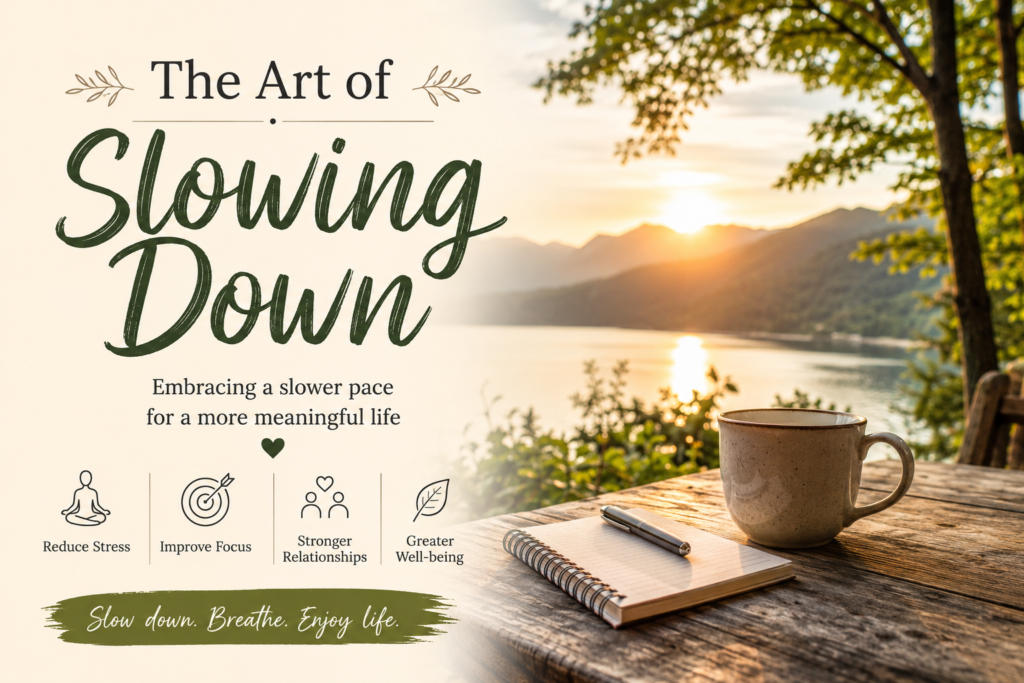
The Art of Slowing Down is not about doing less—it is about living more intentionally. By embracing a slower pace, we can reduce stress, improve focus, strengthen relationships, and find greater fulfillment in everyday life.
Life is not meant to be rushed through. Some of the most meaningful moments happen when we pause, breathe, and fully experience the present. Sometimes, the best way to move forward is not to speed up—but to slow down and enjoy the journey.